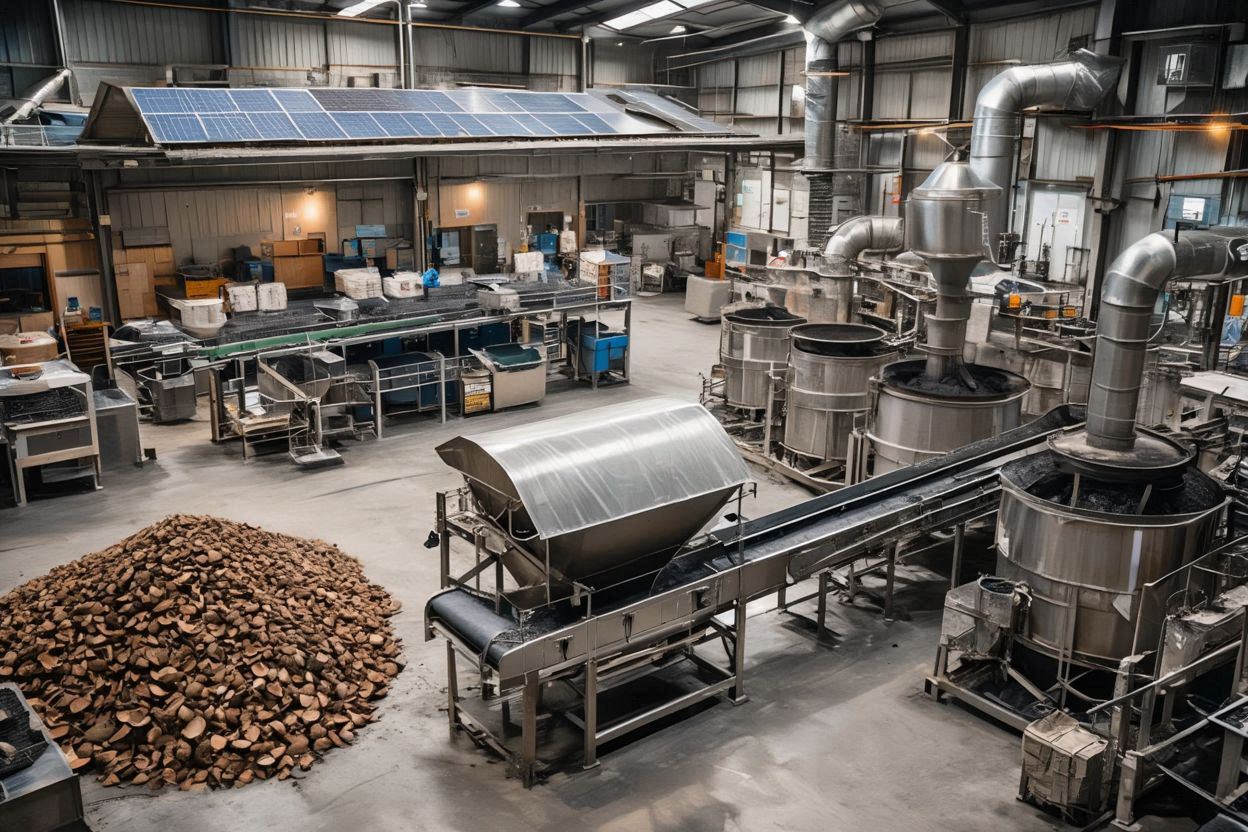
Coconut shell charcoal production process is an essential method for converting agricultural waste into high value and sustainable charcoal products. As global industries increasingly prioritize eco friendly fuel sources, manufacturers focus on efficient processing, consistent quality, and responsible environmental practices.
Rather than depending on hardwood, producers utilize discarded coconut shells as renewable raw materials. Consequently, this approach not only reduces waste but also supports long term sustainability within the charcoal industry.
Initial Preparation of Coconut Shell Raw Materials
The production journey begins with careful raw material selection. Producers collect mature coconut shells from coconut processing facilities and agricultural suppliers. After collection, workers clean the shells thoroughly to remove impurities.
Next, the shells undergo a drying stage to reduce moisture content. As a result, the materials become suitable for stable heating and controlled transformation during the next stage.
Proper preparation improves carbon yield and helps achieve more uniform charcoal structure.
Carbonization in Charcoal Manufacturing
Carbonization represents the most critical stage in charcoal manufacturing from coconut shells. During this phase, producers heat the prepared shells at high temperatures while limiting oxygen exposure.
As volatile compounds evaporate, fixed carbon levels increase significantly. Consequently, the shells transform into dense charcoal with strong heat retention and low smoke output.
Because temperature stability is vital, operators monitor the heating process continuously. Therefore, controlled conditions prevent undercarbonized or brittle charcoal.
Cooling and Material Sorting
After carbonization, charcoal must cool gradually. Producers use natural cooling or controlled systems to avoid sudden temperature changes that may cause cracking.
Once cooled, workers sort the charcoal based on size and quality. Larger pieces are typically used for direct applications, while smaller fragments may be processed further.
This sorting stage ensures uniform standards before packaging or secondary processing.
Quality Control and Performance Testing
Quality control plays a major role throughout the production cycle. Manufacturers conduct tests to measure moisture levels, ash content, and carbon composition.
In addition, inspection teams remove defective material to maintain consistency. As a result, buyers receive charcoal with stable burning performance and minimal residue.
Strict testing procedures also help manufacturers comply with international trade requirements.
Environmental Advantages of Coconut Shell Charcoal
Using coconut shells as raw materials offers clear environmental benefits. By converting agricultural waste into usable energy, producers reduce landfill accumulation and protect forest resources.
Moreover, modern carbonization systems release fewer emissions compared to traditional charcoal kilns. Therefore, manufacturers align production practices with global environmental standards.
As sustainability becomes a priority, coconut based charcoal continues to gain market acceptance.
Industrial Applications and Market Use
Charcoal derived from coconut shells serves a wide range of industries. Common applications include shisha manufacturing, barbecue fuel, activated carbon production, and industrial heating.
Because of its durability and low ash content, many buyers trust materials supplied through coconut shell charcoal production for high performance requirements.
Additionally, manufacturers maintain steady output volumes to support long term supply agreements.
Conclusion
The coconut shell charcoal production process converts renewable waste into a reliable and valuable energy resource. Through careful preparation, controlled heating, and strict quality control, producers deliver charcoal that meets international standards.
To explore more insights about sustainable charcoal manufacturing, visit the official homepage of Digital SEO Box.